Impermanent Resident

  • Everything Is Already Broken

    Everything Is Already Broken

    “In going where you have to go, and doing what you have to do, and seeing what you have to see, you’ll dull and blunt the instrument you write with. But I would rather have it bent and dull and know I had to put it to the grindstone again and hammer it into shape and put a whetstone to it, and know that I had something to write about, than to have it bright and shining and nothing to say, or smooth and well-oiled in the closet, but unused.” –Ernest Hemingway

    This week had to take my favorite pocket camera to Osaka for repairs. I did a dumb thing when riding my bike: I put the camera in what I thought was a secure pouch on the front carrier bag, to keep it within easy reach. Then I came to a place on the bike path where a tree root had grown under the pavement and lifted it, forming something like a speed bump, around which a line of weeds had grown, so I didn’t see it in time to slow down. My bike and I were jarred upwards, and out popped the camera. I heard it land with a dull slap on the pavement behind me . Although it was in a protective case, I knew this wasn’t good. When I retrieved it and turned it on, the screen presented me with an ominous message: “Lens Error.”

    At the camera repair center, I handed it over to the technician, showing him the error message. He nodded like he’d seen it hundreds of times before, then asked me to wait, and took the camera to a back room. I thumbed through brochures of cameras I thought might be possible replacements, in the event mine was beyond repair, feeling like I was waiting for a relative to come out of surgery. About twenty minutes later the technician returned and explained what he’d found. Not surprisingly, the lens was broken by the impact of the fall. In addition, he pointed out — demonstrating with the camera in his hands — numerous dings, scratches and cracks that he said most likely occurred before my encounter with the camouflaged speed bump. I felt my heart sink, realizing all at once that I’d been much harder on my equipment than I was aware of, and that this was almost certainly sign that I’m much harder on others and myself than I should be.

    The technician seemed to notice my distress. He gently assured me they could repair the lens and the other minor damage, and he gave me the price, wrapped in an apology. It was about a third of what it would cost to replace the camera with the latest, advanced model. I thought about it for a moment. The new model in the brochure was impressive. But with my now damaged camera I’d taken tens of thousands of photos in the space of three years, and so it felt like a friend. I gave the technician permission to proceed.

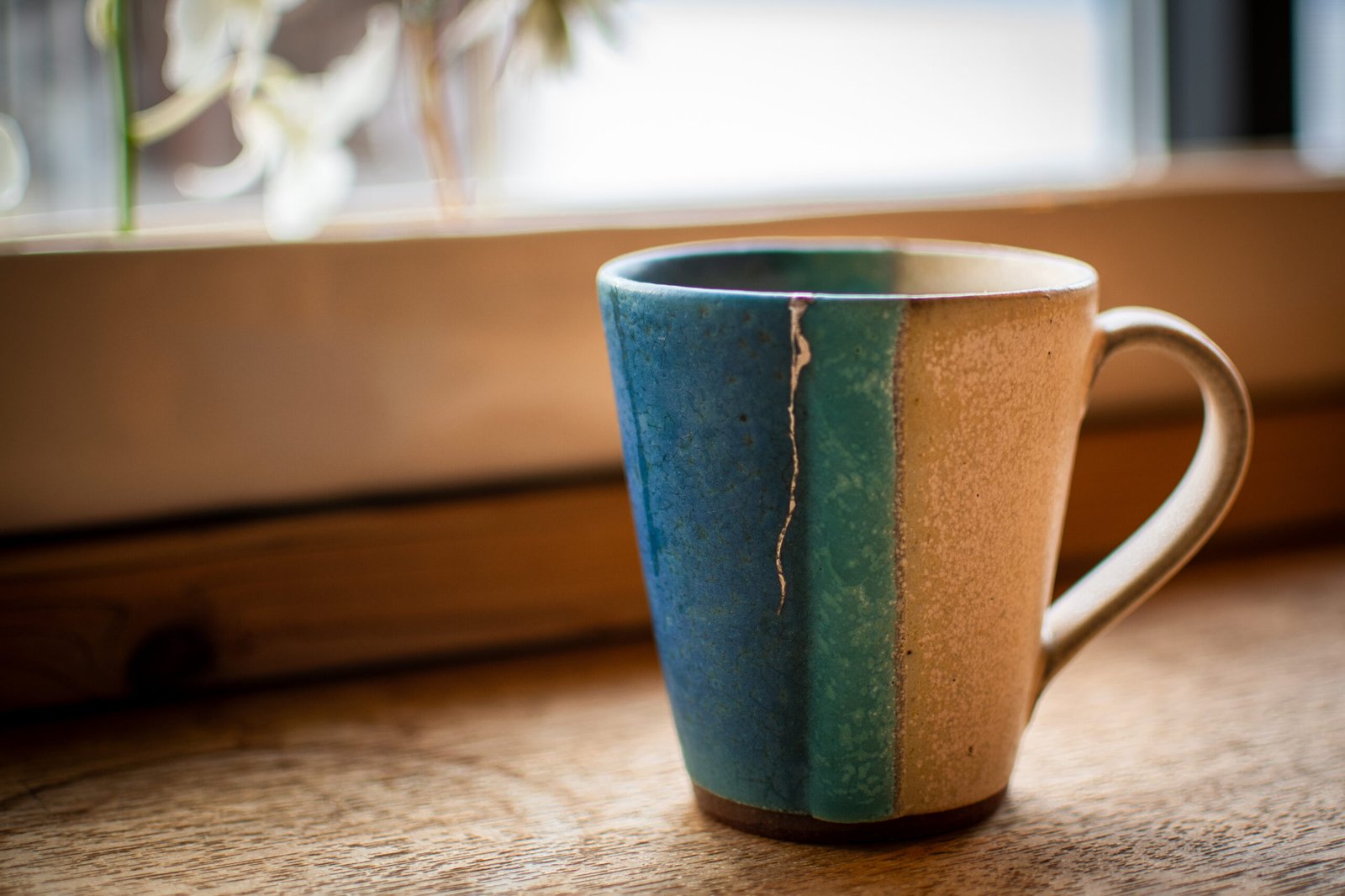
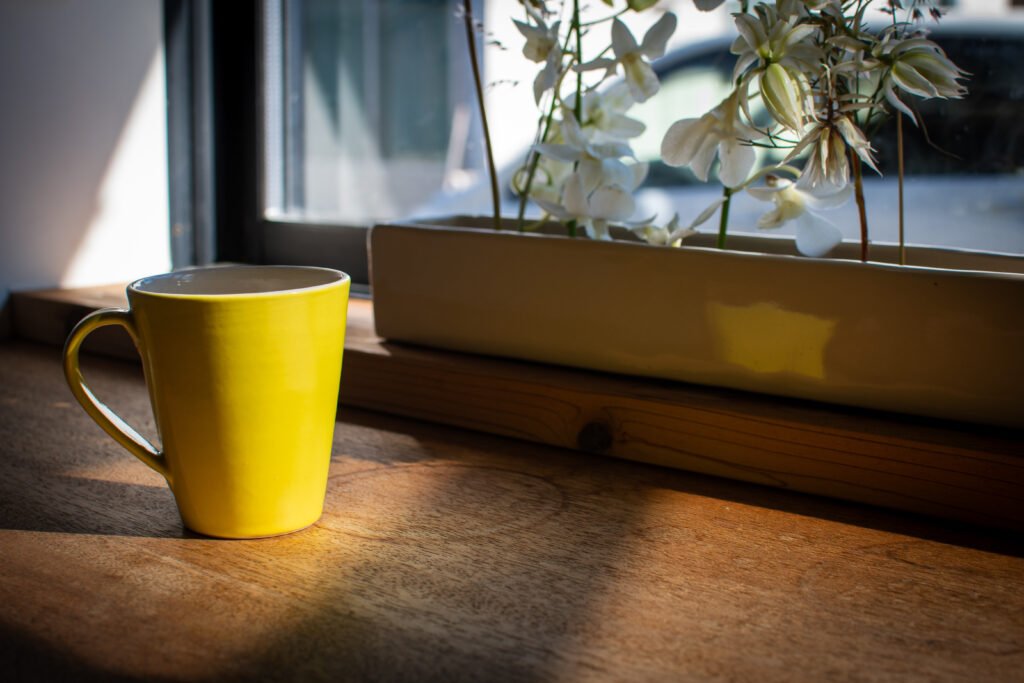
    Years ago, on one of our visits to Japan, my wife and I stopped at a potter’s studio and bought two coffee mugs for ourselves, mine in shades of blue and tan, hers a glistening, canary yellow. They’ve lasted for years, but at one point mine developed a serious crack, and I thought it was finished. I was about to throw it out, but my wife stopped me, explaining that she could repair it in Japan through kintsugi, which is method of mending broken ceramics using a paste mixed with gold (that’s her handiwork on my mug in the featured photo). Many people consider a ceramic object restored by kintsugi to be more beautiful than the unbroken original. Rather than hiding the cracks, kintsugi emphasizes them, expressing the deep history of the object, and producing a unique form of beauty that combines fragility and strength.

    Living well inevitably produces wear and tear. Everything and everyone we love will someday be broken. I’m learning that the best way to exert care for them is to treat them — and myself — as if they already are.
    ***

  • Ringing the Temple Bell

    Ringing the Temple Bell

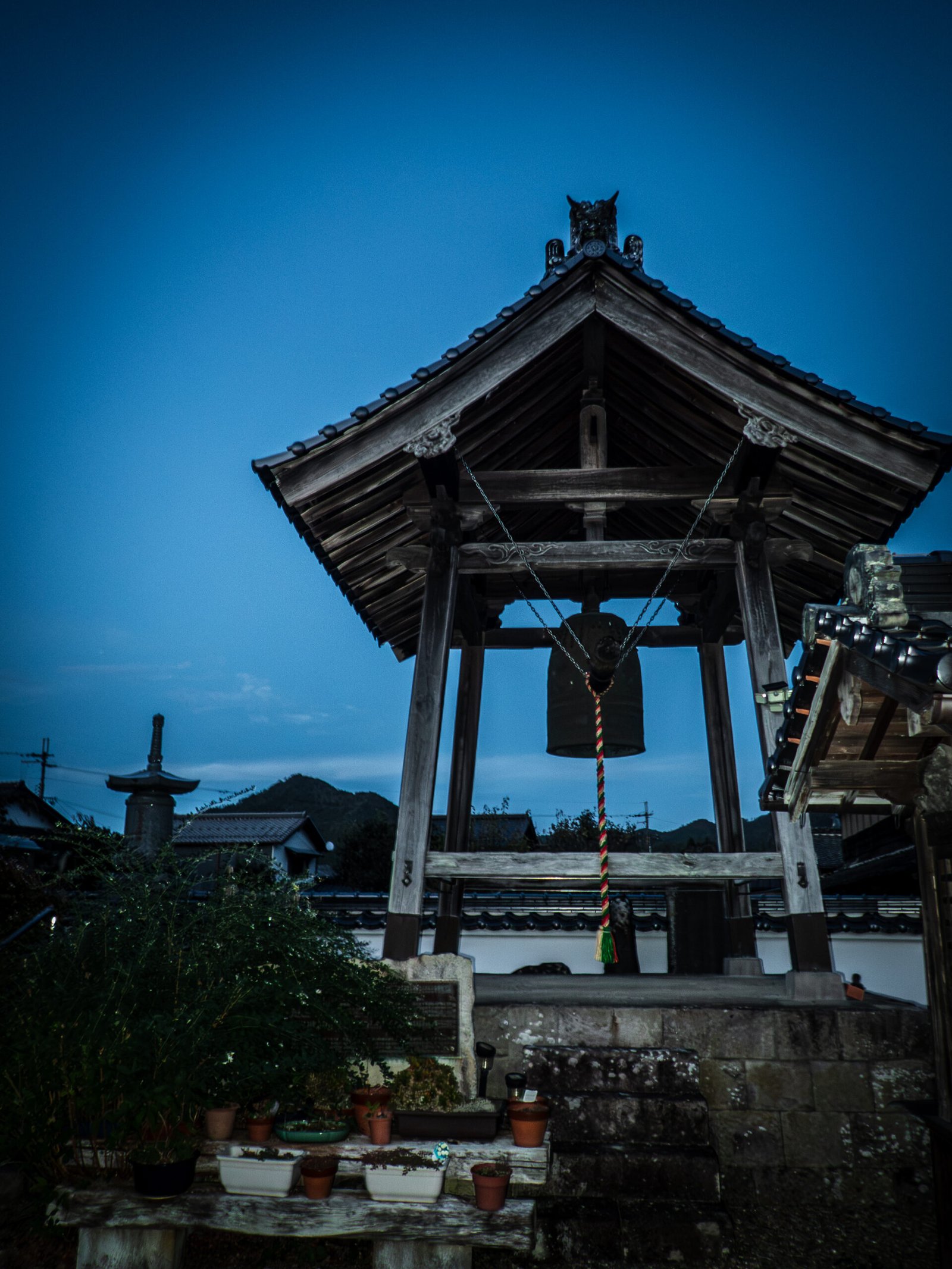
    Just before six o’clock tonight I decided to take a walk around the neighborhood. The sun had just set and the streetlights were coming on around me, one by one. I wandered to the grounds of the Buddhist temple nearest our home and noticed the temple bell, which looked quite impressive against the twilight sky, and so I took a photograph. Just as I was leaving, the priest emerged from the residence and saw me. He invited me to ring the bell for the daily six o’clock ritual, which we can hear every night from our home: six slow rings of the temple bell, a sound that we and our neighbors find very comforting. I hadn’t planned to be present for this evening’s ritual, let alone participate, and thus I was quite surprised. I gladly accepted.

    I ascended the short set of wooden stairs, took the thick rope in my hands, and looked to the priest for instructions. He nodded his head, signaling me to begin. After each time I rang the bell I waited for his next signal, while a cool breeze touched my skin and the sound of the bell faded beneath the chirping of crickets. Only when the ringing had faded to near silence — which took nearly a minute — did the priest nod his head again, and again I rang the bell. After the sixth ring had faded completely, the priest nodded a final time, and I bowed to the bell and descended the stairs. Facing the priest, I bowed and thanked him, and he returned the bow. We wished one another good night, and parted.

    That was a very good walk.

    ***

  • Chestnuts and Grapes

    Chestnuts and Grapes

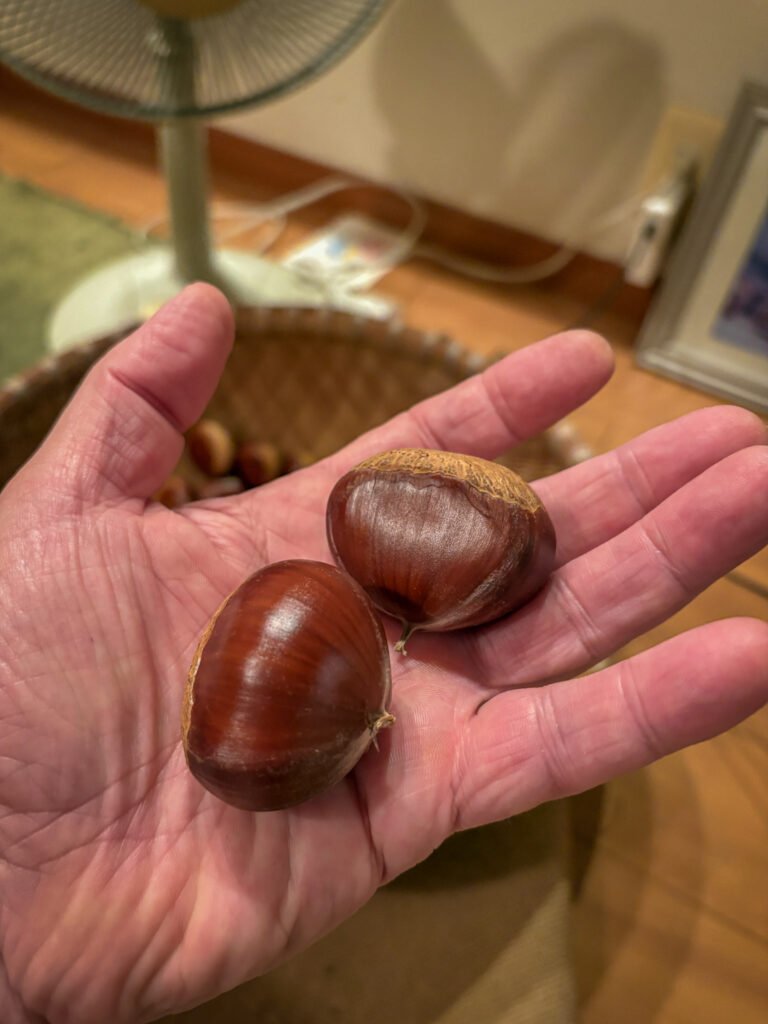
    In our area of Hyogo Prefecture it’s now the harvest time for chestnuts and grapes. My wife and I are fortunate to have two chestnut trees in our yard. This year they’ve been especially productive, and the chestnuts are huge. Not only are we fortunate to have the trees, but we also have a close friend, Sato san, who is a professional fruit tree pruner (among her many other talents). The size and number of our chestnuts this harvest is largely due to her efforts over the whole year.

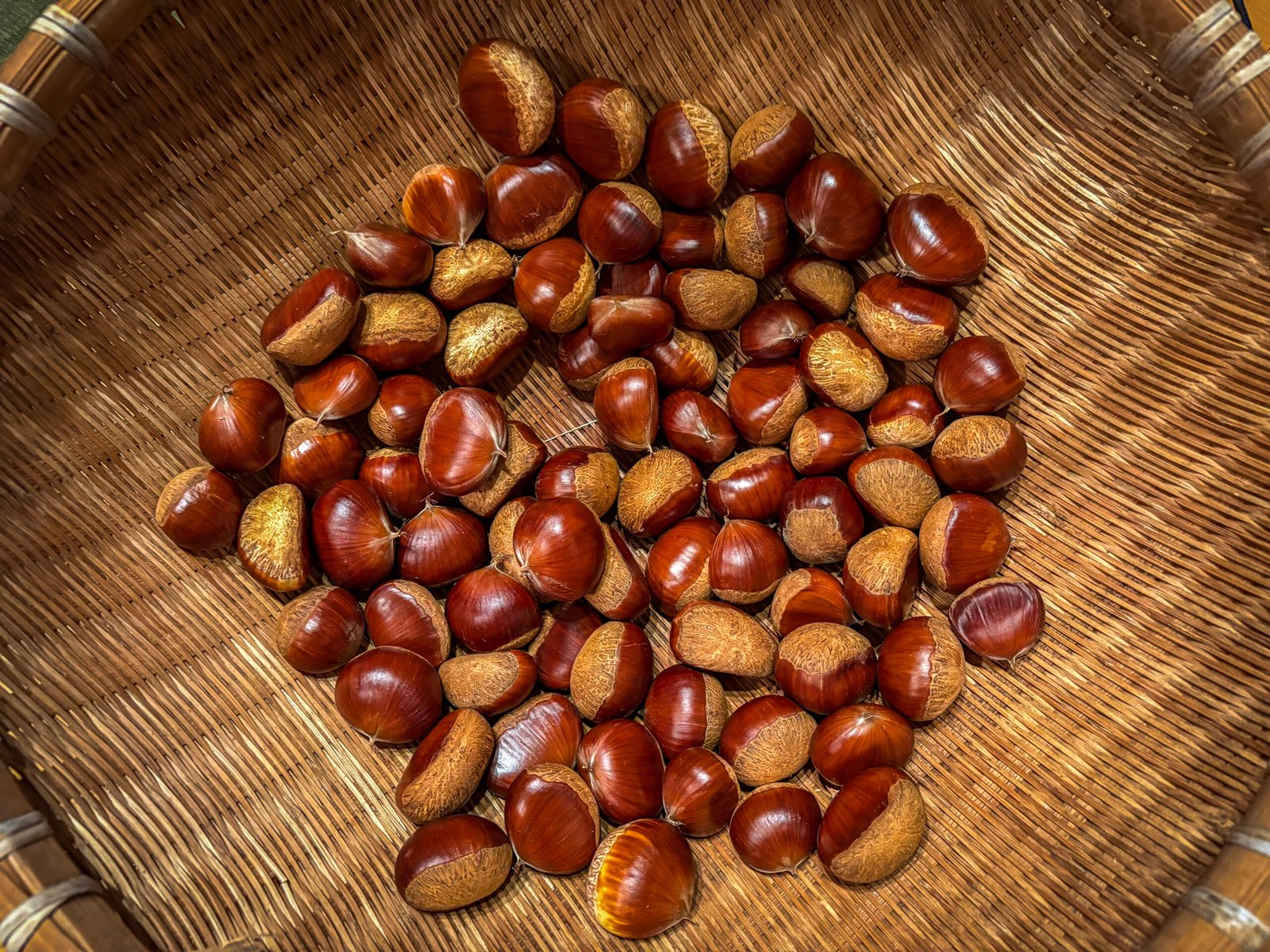
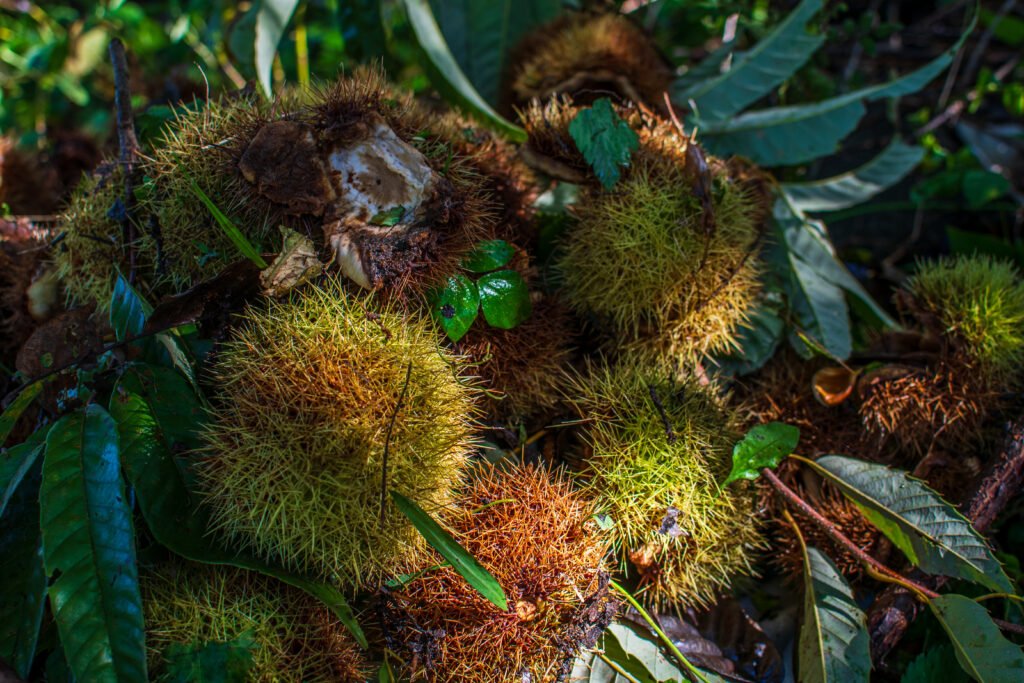
    Unlike Sato san, we know nothing about growing chestnuts. Yesterday, seeing they were ripe, we plunged in and went about shaking the trees to dislodge the sharply-spiked shells containing the nuts. With some prodding and clipping, a number of these prickly little cannonballs came crashing through the trees, causing us to duck for cover. We gathered them, together with the ones that had fallen to the ground without our assistance, cracked the shells open with our feet and with our hands (protected with leather gloves), removed the little delicacies, rinsed them, tossed them in a big, flat wicker basket, then pointed a fan at them and left them to dry overnight.

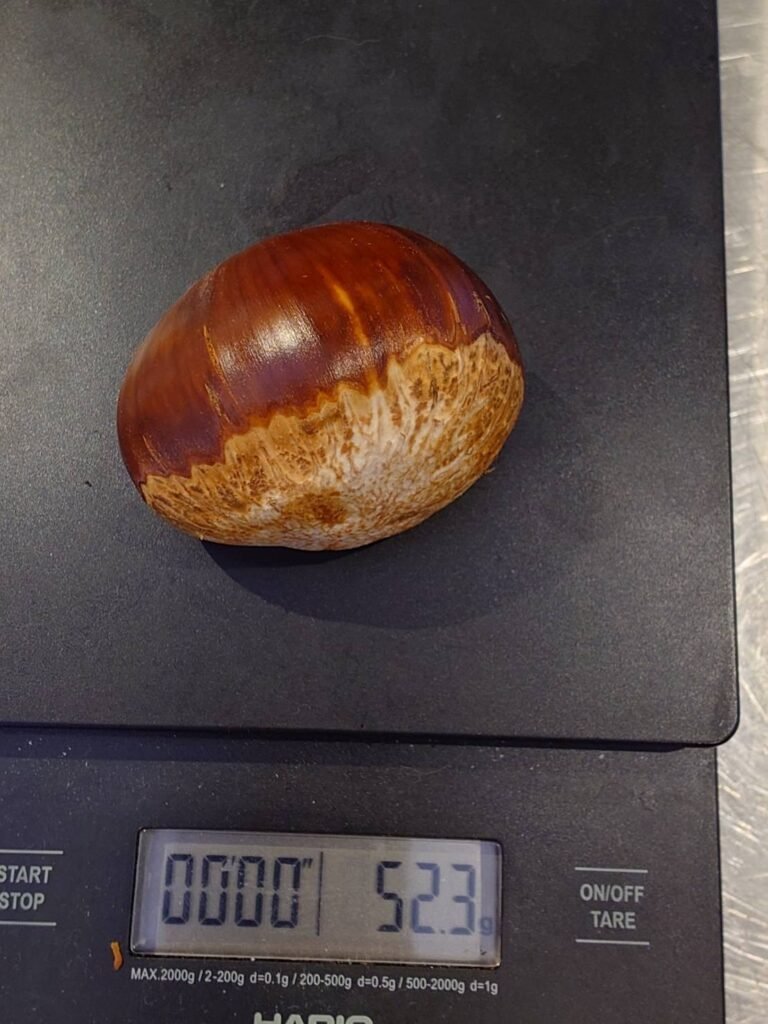
    Today we showed our daily harvest to Sato san, who was impressed. She thought we may have harvested a record-sized chestnut, and so she decided to weigh it.

    Photo by Yurika Kinugawa

    According to Sato san, this chestnut is three levels above the top level of the common scale that is used to compare the relative sizes of chestnuts. I couldn’t quite grasp that. If it’s above the top level, and by definition there are no levels above the top level, then how can this chestnut be three levels above that? I tried to sort it out with her, but she just happily repeated: yes, this chestnut is three levels above the top level. I had the feeling she was teasing me with a Zen koan, like asking me what is the sound of one hand clapping, or whether a tree that falls in the woods makes a sound if there is no one there to hear it. But I recognized that, as usual, my limited Japanese language skills were probably the cause of my incomprehension, and nothing more profound than that.

    As pleased as Sato san was with this enormous chestnut, she admonished us after we told her we had shaken the trees and had cut some of the branches near the shells. Let them fall on their own, she advised, otherwise you’ll hurt the trees. Now my wife and I have cleared the undergrowth so that we can easily spot the fallen shells and nuts in the dark shadows under the canopy of the traumatized trees. We hope they’ll forgive us.

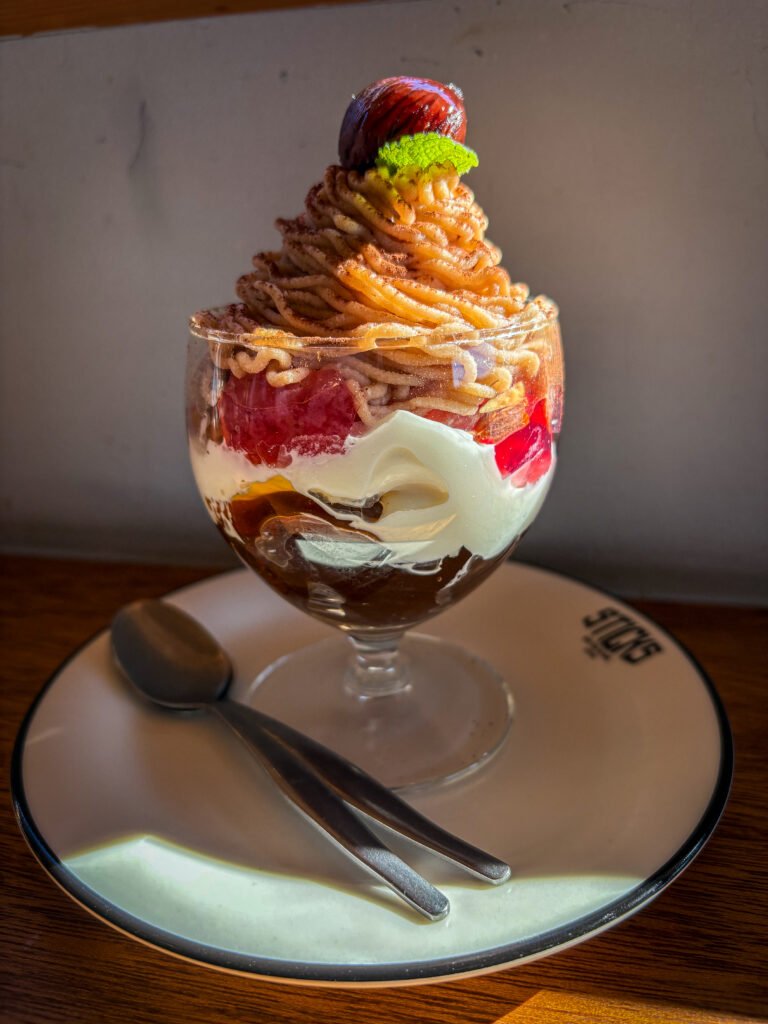
    My favorite way to eat chestnuts is boiled, diced, and mixed in a bowl of rice, spiced with just salt and pepper. But of course there are a lot of people who think of them as dessert, especially in the form of a Mont Blanc. I’d never even heard of this treat before I came to Japan, but it’s very popular here, and is offered in many varied forms, with certain restaurants vying for the reputation of having the best Mont Blanc. This specimen is from one of our favorite places, Sticks Coffee.

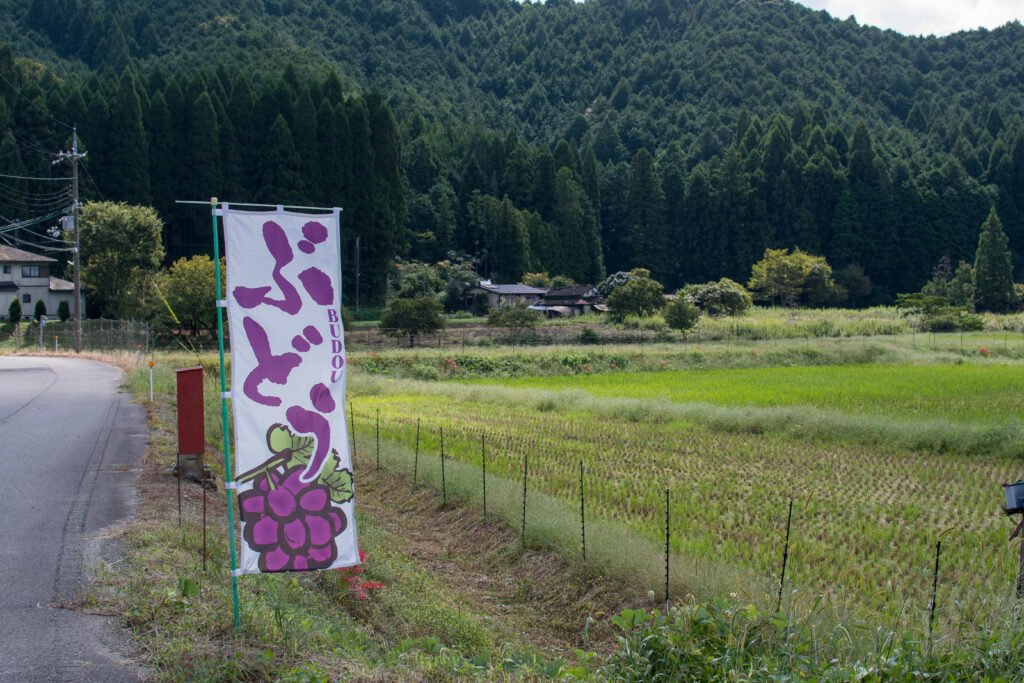
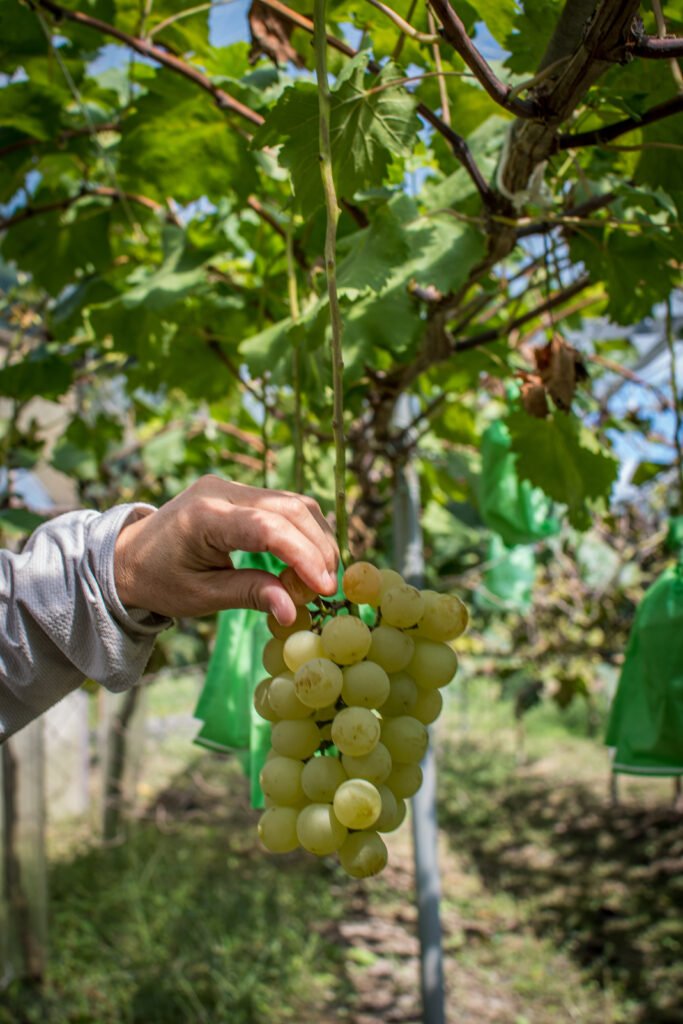
    The yearly chestnut harvest in Tamba corresponds to the tail end of the grape harvest. Many grapes are produced here — for eating, not for drinking. Sato san also knows plenty about grapes, since she works part-time in a nearby vineyard. I visited her there this week, to take a few photos and to buy some of the last grapes of the season.

    She explained that most of the grapes still on the vine at this time of year are for raisins. That’s Sato san’s hand in the photo below, culling some bad grapes from a bunch destined to become a box of raisins.

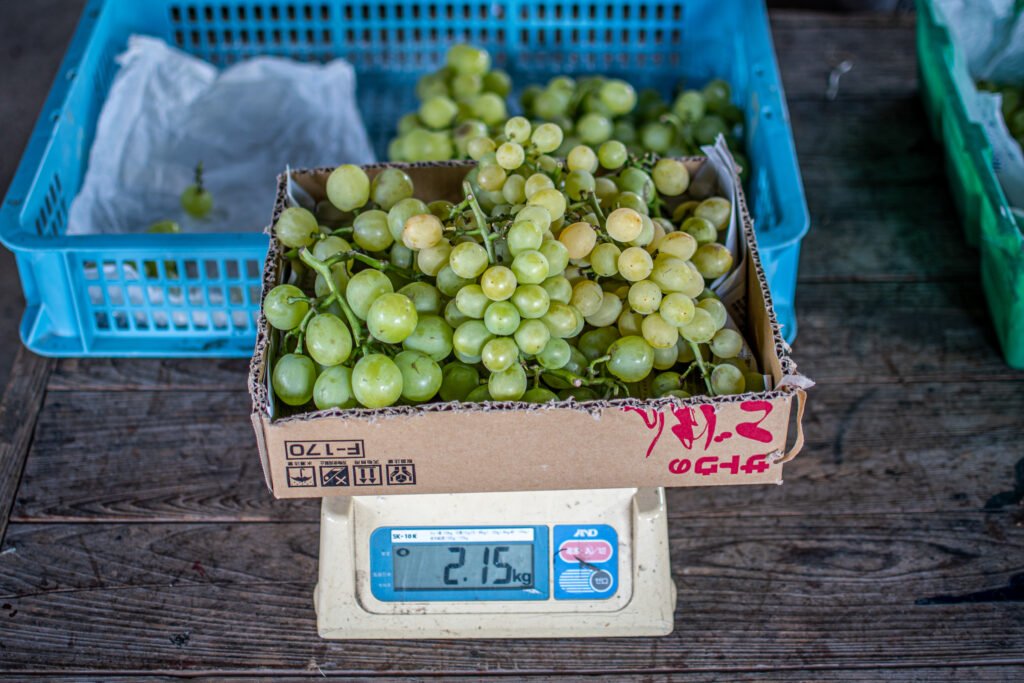
    I bought about two kilograms of grapes, of two varieties. It cost me ¥4,600, which I was happy to pay because the vineyard employs two of my friends…and because the owner has five children and I feel obliged to support any effort to repopulate the Japanese countryside, given that my wife and I are not directly participating in that effort, aside from having moved here…

    And because the grapes are really good.

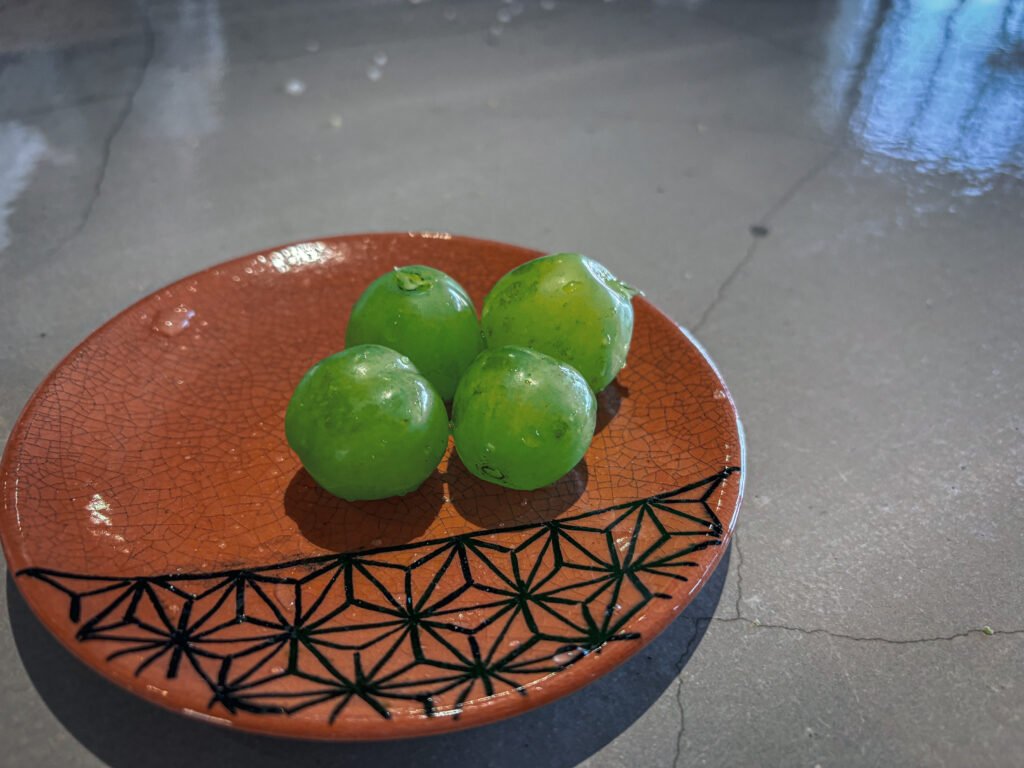
    I bought so many grapes that I had to give some away. Apparently, other people in my neighborhood are in the same situation. I went to a local coffee shop later (a great place called Ajun Coffee & Yums) and a customer came in with a bag of grapes and handed them to the owner. She placed four each on beautiful, matching plates, and served them to all the other customers.

    ***